

Product
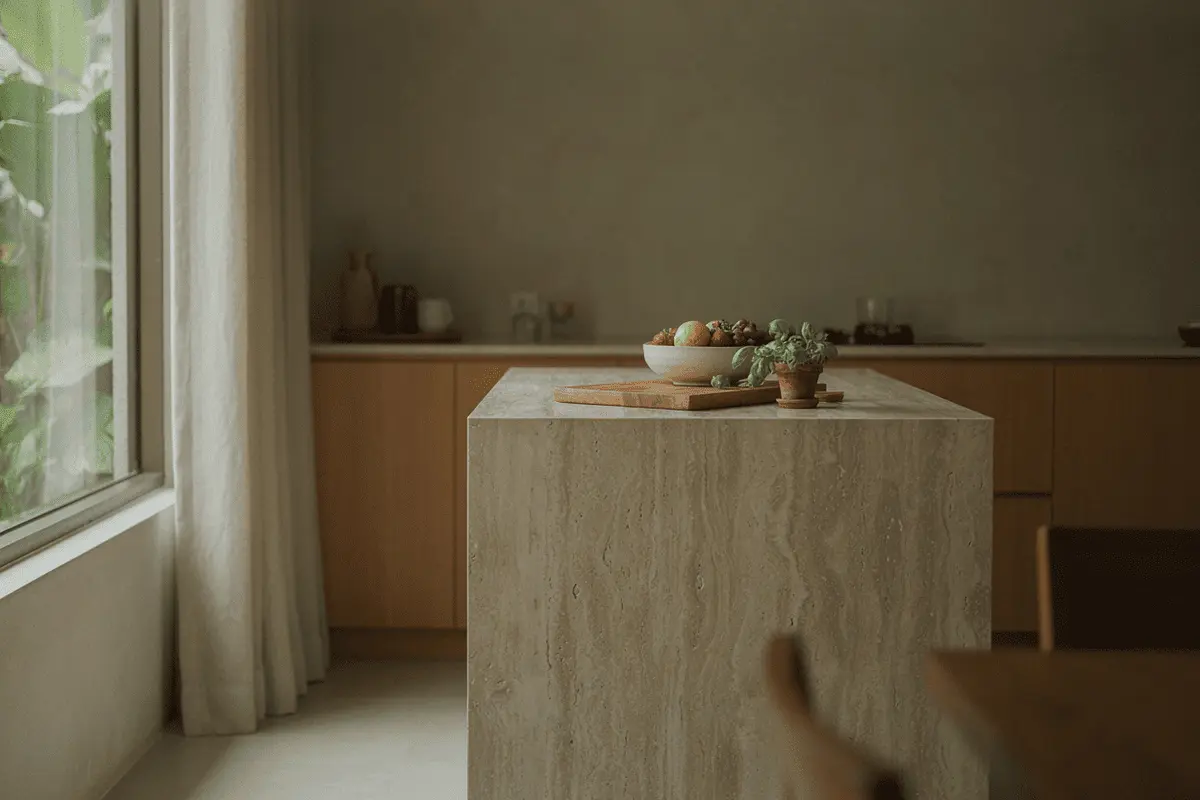
If you’ve been shopping for a new kitchen countertop, chances are you’ve heard the term “sintered stone” more than once. Sales reps say it’s tough, low maintenance and good-looking, but what is sintered stone exactly, and is it a good fit for a Singapore home? Whether you’re renovating an HDB flat, upgrading a condo kitchen or planning a new build, here’s a simple guide to help you decide before you head to a showroom.
Sintered Stone, Explained
Sintered stone is an engineered surface made from natural minerals such as quartz, feldspar, silica and clay, plus natural pigments for colour. These minerals are pressed together under very high pressure and fired at extreme heat. This process is called sintering, and it fuses everything into one dense slab without needing resin to hold it together. Think of it as nature’s rock-making process, just sped up. The result is a very hard, compact surface that can be made to look like marble, travertine, concrete or even wood.
You may also hear it called an ultra-compact surface or a large-format slab. At Polybuilding, you’ll find it under Large Format Sintered Slabs, including the LAMINAM range from Italy. It’s often compared with engineered quartz, but the two are made differently. Quartz is mostly crushed stone held together with resin, while sintered stone has no resin at all, which is why it handles heat and sunlight in a different way. Because it’s made in a controlled factory setting, each slab also tends to be more consistent than a piece of natural stone, with fewer surprise veins or weak spots running through it.
Why Homeowners Are Choosing It
The biggest draw is how well it copes with real life. Anyone who cooks Asian food knows the panic of a hot wok with nowhere to put it down. Because sintered stone is fired at high temperatures during manufacturing, it handles heat far better than resin-based surfaces. You should still use a trivet, but one quick slip is unlikely to leave a mark. The surface is also dense and non-porous, so oil, soy sauce, turmeric, coffee and wine have little chance to soak in. Wipe it down and you’re done, and there’s no sealing needed, which is one less chore compared with marble and some granites. For busy households, that kind of low-fuss upkeep matters more than most people expect.
It also looks good and stays that way. Modern printing and finishing techniques let sintered stone copy marble veining or travertine texture very convincingly, so you get the look of natural stone without worrying about lemon juice or cleaning products etching the surface. Finishes range from polished and glossy to soft matte, so you can pick whatever suits your home. Because it’s UV-resistant, it also holds its colour in strong sunlight, which makes it a good match for balconies, outdoor kitchens and even exterior cladding where other surfaces might fade or yellow over time. In a tropical climate like ours, with intense sun and frequent rain, that staying power is a real advantage.
Where It Works Best in a Singapore Home
Sintered stone is flexible, but some spots make more sense than others:
- Kitchen countertops and islands: Tough enough for heavy cooking and easy to wipe clean after a long day. The large format also means fewer seams across a long countertop.
- Backsplashes, bathroom vanities and feature walls: Large slabs mean fewer grout lines to scrub, and the non-porous surface suits humid bathrooms where mould and mildew can build up in the gaps.
- Balconies and outdoor areas: UV stability makes it a good match for sunny spots that get a lot of weather.
- Flooring: It works in living and outdoor areas, but check thickness and installation method with your supplier first.
For HDB and condo owners, the large format is a bonus in compact kitchens. Fewer joints make a small space feel cleaner and more open, and a continuous surface from countertop to backsplash can make the whole room look bigger than it is.

How It Compares and How to Care for It
Each material has its place, so it helps to know where sintered stone fits. Engineered quartz is a great all-rounder with plenty of edge and fabrication options, but the resin means it can be more sensitive to heat and long-term sun exposure. Granite brings natural character and handles heat well, though many types need regular sealing to stay protected from stains. Porcelain tiles are budget-friendly and practical for floors, but smaller tiles mean more grout lines to clean. Sintered stone is the one to look at if you want strong heat and UV performance with large, clean surfaces.
Care is simple too. Wipe spills with a soft cloth and mild soap, then rinse with water. There’s no sealing schedule to remember and no special products to buy. Just avoid dragging heavy pots across the surface, and keep a chopping board handy for your knives. A little common sense will keep it looking new for years.
What to Know Before You Buy
No material is perfect, so here are a few things to keep in mind before you decide:
- Edges can still chip: The surface is hard, but a sharp edge can chip under a heavy knock. A softened edge profile helps, especially in busy family kitchens.
- Fabrication needs experience: The slabs are dense, large and heavy, so choose an installer who has worked with sintered stone before. Some decorative edge profiles are also harder to achieve than with quartz or granite, so it’s worth discussing the design early.
- Go for established brands: Look for consistent colour and thickness across batches, and always ask to see and touch a real sample, since colours look different under showroom lights and at home.
Final Thoughts: So, What Is Sintered Stone Really?
Simply put, it’s a tough, mineral-based surface that gives you the look of natural stone with better resistance to heat, stains and sunlight. For busy kitchens, humid bathrooms and sunny balconies in Singapore, that makes it a very practical choice.
It isn’t the right pick for every home, but it’s well worth a look if you want large, clean surfaces with very little upkeep. If you’d like to see how it looks and feels in real life, drop by Polybuilding and our team will gladly walk you through our LAMINAM sintered slabs.
Get in Touch
We value action, ownership, accountability, honesty, and the ability to make tough decisions.
8 Tuas Avenue 11, Jurong,
Singapore 639074
Singapore 639074
Mon-Thurs:
9.00am – 6.30pm
Fri:
9.00am – 5.30pm
Sat:
10.00pm – 4.00pm
Any other timings by appointment only.
Sun & Public Holidays Closed
Get in Touch
We value action, ownership, accountability, honesty, and the ability to make tough decisions.
We are Singapore’s leading natural stone and tile suppliers, stocking an extensive range of the finest quality marble, granite, limestone, travertine, onyx, quartz, sandstone, homogeneous tiles, and agglomerate compressed stones.
Sodalite Blue Kitchen Island
Statement kitchen countertop featuring a double waterfall edge. Shown in Sodalite Blue marble, in a polished finish.
Capitol Building
A high traffic commercial shopping space featuring the following materials: Travertine Silver Epoxy Filled & Honed, Carrara White Polished Marble wall


