Is Sintered Stone Better Than Quartz for Singapore Homes?

If you’re planning a new kitchen, chances are you’ve narrowed your shortlist to two names: engineered quartz and sintered stone. Quartz has been the go-to for years, while sintered stone is the newer material that keeps showing up in design magazines and showroom displays. It’s natural to wonder is sintered stone better than quartz, or is it just newer and more expensive? Here’s an honest look at where each one wins, so you can choose with confidence.

The Short Answer

So, is sintered stone better than quartz? Not always, but in some situations it is. Sintered stone is the stronger performer when it comes to heat, sunlight and large, seamless surfaces. Quartz is the more flexible and familiar choice when you want the widest colour range, more edge options and easier fabrication. Neither one is a bad pick, so the real question is which one fits your kitchen and your cooking habits.

The main reason for the difference is what’s inside each slab. Quartz is mostly crushed quartz held together with resin, while sintered stone is made from natural minerals pressed and fired at very high heat, with no resin at all. Almost every pro and con below comes back to that one fact.

Where Sintered Stone Comes Out Ahead

If your kitchen takes a beating, sintered stone has a few clear advantages:

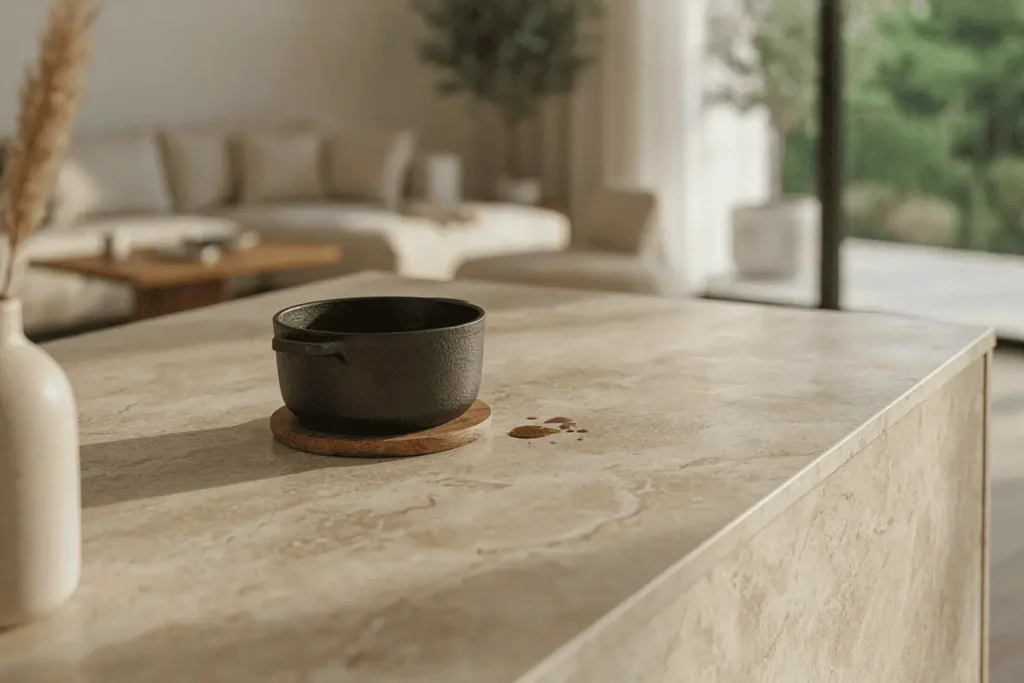
  • Heat resistance: Because it’s fired at high temperatures when it’s made, it handles hot pots and pans better than resin-based quartz. You should still use a trivet, but a quick slip is far less likely to leave a mark.
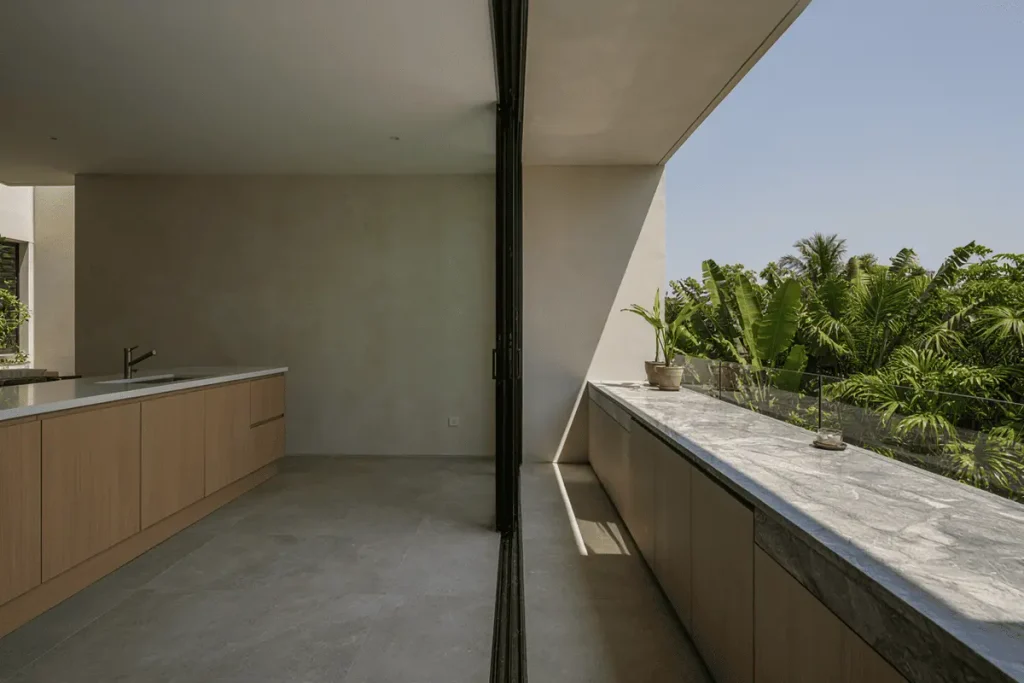
  • Sunlight and outdoor use: It’s UV-resistant, so the colour holds on balconies, in outdoor kitchens and in kitchens with strong afternoon sun. Quartz is better kept indoors.
  • Scratch resistance: The surface is very hard and tends to resist scratches well, though you should still use a chopping board.
  • Large, seamless slabs: The large format means fewer joints on a long countertop, and you can carry the same slab up the wall as a backsplash.

For a home that cooks with a lot of heat or wants the same material inside and out, these points can be a real deciding factor. They matter most when your lifestyle actually uses them, though. If you cook lightly and your kitchen sits away from the window, you may never test sintered stone’s heat and UV advantage at all.

Where Quartz Still Wins

It would be unfair to call sintered stone the clear winner, because quartz has real strengths of its own. It’s a proven material with a long track record in Singapore homes, and it comes in a huge range of colours and patterns. Many homeowners also like its consistent, uniform look, with patterns that stay the same from one slab to the next. Established brands such as Cambria, Luxora and Quarella offer plenty of choice, from soft whites to bold dark shades. It’s also generally easier to cut and shape, which means more decorative edge profiles and more installers who are comfortable working with it.

Quartz is also very low fuss. It’s non-porous, so it resists stains from oil, sauces and coffee, and like sintered stone it doesn’t need sealing. For a typical indoor kitchen where heat and sunlight aren’t major concerns, quartz is often the more practical and budget-friendly option, especially if your layout is complex or you want a more detailed edge.
How to Decide for Your Own Home

The easiest way to settle the question is to think about how you actually live. Ask yourself a few simple questions:

  • Do you cook with high heat most days? If so, sintered stone gives you extra peace of mind.
  • Does your kitchen get strong sunlight, or open onto a balcony? Sintered stone holds its colour better under UV.
  • Do you want a very specific colour or a decorative edge? Quartz usually offers more choice.
  • Is your layout complicated, with many cutouts or corners? Quartz can be easier to fabricate.
  • What’s your budget? Prices overlap a lot, so it’s worth comparing quotes for your actual measurements.

If most of your answers point in one direction, you probably have your winner. If your answers are split down the middle, don’t worry. That usually means both materials would serve you well, and the decision can come down to which one you simply like looking at more.

Things Worth Checking Before You Buy

Whichever material you lean towards, a few simple steps will help you avoid surprises. Always view and touch real samples, since colours can look different under showroom lights and at home. Choose an established brand for consistent colour and thickness, and ask your installer whether they’ve worked with the material before, because sintered stone slabs are dense, large and heavy. It also helps to share your measurements and describe how you cook, so your supplier can point you to the right surface from the start. Finally, think long term: a future balcony kitchen or a growing family might change what you need in a few years.

Sintered stone isn’t automatically better than quartz, but it is better suited to certain homes. If you want top performance with heat and sunlight, or a large seamless look that runs from the countertop to the backsplash, it’s a great choice. If you value flexibility, colour range and easier fabrication, quartz remains a reliable favourite that has proven itself in Singapore kitchens for years.

The good news is that you can’t go far wrong with either one, as long as you choose a reputable brand, view the real slabs and work with an installer who knows the material. The best surface is the one that suits the way you cook, the light in your kitchen and the look you want to live with every day.

Not sure which way to go? Bring your kitchen plan to Polybuilding, and our team will lay out quartz and LAMINAM sintered samples for you to compare against your own cabinet and flooring colours.

Quartz vs Sintered Stone, What’s the Real Difference?

Walk into any stone showroom today and you’ll hear the same question from homeowners: should I go for quartz or sintered stone? Both are popular for kitchen countertops, vanities and wall features, both look great, and both promise low maintenance. So what actually separates them? If you’re stuck on quartz vs sintered stone, this guide breaks down the real differences in plain language, so you can pick the one that fits the way you live.

How They’re Made

The easiest way to understand the difference is to look at what’s inside. Engineered quartz is made mostly from crushed natural quartz, which is mixed with resin and pigments and then pressed into slabs. The resin acts as the binder and gives quartz its smooth, flexible, easy-to-work character. Quartz has been a favourite in Singapore kitchens for years, so it’s a familiar and well-tested option.

Sintered stone takes a different route. It’s made from natural minerals such as silica, feldspar and clay, which are pressed under very high pressure and fired at extreme heat until they fuse into one dense slab. There’s no resin at all. That single difference explains most of what follows, from how each surface handles heat to how it behaves outdoors. At Polybuilding, for example, you’ll find engineered quartz from brands like Cambria, Luxora and Quarella, and large-format sintered slabs from LAMINAM, so it’s easy to compare both under one roof.

Quartz vs Sintered Stone in Everyday Life

Here’s how the two compare on the things that matter most once the renovation is over:

  • Heat: Sintered stone handles high heat very well because it’s fired at high temperatures during manufacturing. Quartz can cope with normal cooking, but the resin makes it more sensitive to a very hot pot placed straight on the surface, so a trivet is a must.
  • Stains: Both are non-porous and resist staining from oil, sauces, coffee and wine, and neither needs sealing. Sintered stone has a slight edge with harsh stains like turmeric and dark spices, though a quick wipe works on both.
  • Sunlight and outdoor use: Sintered stone is UV-resistant and keeps its colour on balconies and in outdoor kitchens. Quartz is best kept indoors, since long exposure to strong sun can cause the resin to fade or yellow over time.
  • Scratches: Both are hard and durable, but sintered stone tends to be more scratch-resistant. You should still use a chopping board with either one.
  • Appearance: Quartz offers a huge range of colours and a consistent, uniform look. Sintered stone is excellent at copying marble, travertine and concrete, often with more natural-looking veining and large slabs that run with fewer joints. Both come in polished and matte finishes, so the look you want is rarely out of reach.
  • Fabrication and edges: Quartz is generally easier to cut and shape, so decorative edge profiles are more widely available. Sintered stone is denser and needs experienced fabricators and the right tools, and some edge styles are harder to achieve.
  • Cost: Prices overlap a lot and depend on brand, thickness, design and installation. Good-quality quartz and sintered stone often sit in a similar range, so it’s best to compare quotes based on your own layout.

Which One Should You Choose?

There’s no single winner, because the better choice depends on your home and your habits. Quartz is a smart pick if you want a wide range of colours, more edge options and a surface that’s friendly to fabricate. It’s a proven all-rounder that works very well in most indoor kitchens and bathrooms, and it’s often the more comfortable choice for a tighter budget or a complex layout. Day to day, it’s also very low fuss, with no sealing and only a soft cloth and mild soap needed to keep it clean.

Sintered stone makes more sense if you cook with high heat every day, have a kitchen that gets strong sunlight, or want to extend the same material to a balcony, outdoor kitchen or feature wall. It’s also a good fit if you love the idea of a large, seamless slab that runs from countertop to backsplash with very few joints. In bathrooms, both work well on vanities, but sintered stone’s large slabs can also clad walls and shower areas for a clean, low-grout look in humid spaces.

If you can’t decide, think about the one thing you’d hate most to deal with. For some people that’s a heat mark, for others it’s a difficult installation or limited design options. Answering that honestly often settles the debate. Neither is a bad choice, so the real goal is a good match, not a perfect material.

Things to Check Before You Commit

Whichever material you lean towards, a few simple steps will help you avoid surprises:

  • Look at real samples: Colours and finishes can look very different under showroom lights and at home, so view and touch the actual slabs.
  • Ask about the brand: Established brands offer more consistent colour, thickness and quality from slab to slab.
  • Confirm the installer’s experience: Sintered stone in particular needs a fabricator who has worked with large, dense slabs before.
  • Think long term: Consider how your needs may change, such as a future outdoor kitchen or a growing family, and pick the surface that will still suit you in ten years.
  • Share your measurements: The cost and number of slabs depend on your layout, so a proper quote is the only way to compare accurately. It also helps to tell your supplier how you cook and how much sun your kitchen gets, so they can point you to the right surface from the start.

Making the Choice Easier

Both are strong, long-lasting surfaces, and many homeowners are happy with either. The right one is simply the one that matches your cooking style, your design taste and your budget.

Still on the fence? Come by Polybuilding and see our quartz and LAMINAM sintered slabs side by side. Seeing and touching them together is often the quickest way to know which one feels right for your home. Our team can explain the trade-offs honestly, whichever material turns out to be the better fit.

Why the Best Quality Quartz Is Worth Every Singapore Dollars?

Quartz has become one of the most sought-after materials in modern homes, especially for kitchens and bathrooms. Its clean, elegant look, impressive durability, and low maintenance make it a top choice for homeowners and interior designers alike. But if you’re considering quartz, you might be wondering, what actually makes the best quality quartz stand out from the rest?

Whether you’re renovating, building your dream home, or just doing some research before your next project, this guide will walk you through everything you need to know. From how quartz is made to what features define its quality, here’s what makes top-grade quartz truly worth considering.

What Is Quartz?

Quartz countertops aren’t cut straight from a natural slab like granite or marble. Instead, quartz is an engineered stone, made by combining around 90 to 95% crushed natural quartz crystals with resins, polymers, and pigments. This process creates a surface that looks a lot like natural stone, but with added benefits.

One of quartz’s biggest advantages is that it’s non-porous, which means it doesn’t absorb liquids or stains easily. It’s also more resistant to bacteria and mold, making it a great choice for surfaces like kitchen counters, bathroom vanities, and even commercial interiors where hygiene and durability matter.

What Defines the Best Quality Quartz?

Not all quartz is created equal. While it’s easy to be drawn in by beautiful displays at showrooms, the quality behind the surface can vary a lot. So, what should you really be looking for when you want the best of the best?

1. High Quartz Content

Firstly, one of the first things to check is the quartz content in the material. The best quality quartz usually contains at least 93% natural quartz crystals. The higher the quartz content, the stronger and more durable the surface. A dense quartz slab offers better resistance to scratches, chips, and cracks—especially important for busy households or high-traffic commercial spaces.

2. Consistent Colour and Pattern

Unlike natural stone, where each piece is different, high-quality quartz is engineered for consistency. Premium slabs will have a uniform colour, texture, and pattern across the entire surface. That makes it much easier to achieve a clean and cohesive design, especially if you’re using it for large surfaces like kitchen islands or waterfall countertops.

3. Reputable Brand or Manufacturer

When evaluating quartz, brand reputation matters. Established names in the quartz industry, most of the times invest heavily in research, design innovation, and quality assurance. Choosing a reputable and trusted brand means you’re more likely to receive a product that has been rigorously tested for strength, performance, and environmental safety, durability and backed by reliable customer support and installation guidance.

4. Certifications and Warranties

The best quality quartz is often certified by industry organizations like NSF (for food safety) or GREENGUARD (for low chemical emissions). Additionally, premium quartz brands typically offer warranties of 10 years or longer, sometimes even lifetime coverage. A long warranty is a strong indicator of the manufacturer’s confidence in their product’s durability and performance or on other words, it tells you that they are standing behind the quality of their product.

5. Durability and Resistance

A good quartz surface should do more than look good—it should hold up to the demands of daily life. The best quality quartz resists scratches from knives or heavy kitchen tools, and it doesn’t stain easily from spills like wine, coffee, or oils. While it does have some heat resistance, it’s still smart to use a hot pad or trivet rather than placing hot pans directly on it.

Because of its toughness and low maintenance, a well-maintained quartz surface can look like new for 10 to 15 years or even longer. That makes it a solid long-term investment, especially when you want beauty that lasts without the fuss of constant upkeep.

In short, choosing the right quartz surface is about more than picking a colour or finish—it’s about finding a material that fits your lifestyle, stands up to everyday use, and adds lasting value to your space. The best quality quartz gives you all that and more, offering a sleek and stylish look with the strength to handle life’s messes.

6 Reasons Why Quarella Quartz Is Your “Best Decision Ever”

What is Quarella?

Quarella provides a wide range of aesthetically, technically and economically superior quartz surfaces for flooring, table tops, kitchen countertops, vanity tops, and other interior design elements. All quartz surfaces are produced in Italy, ensuring the highest standard of quality and production.
 

Why Choose Quarella?

1. Made in Italy

With over 50 years of experience in the business, Italian-made Quarella quartz has been creating contemporary “Italian lifestyle” surfaces of great charm and elegance. With a perfected production process, they consistently achieve and repeat extremely high standards of quality.
 

2. It’s Affordable

Despite being produced wholly in Italy, Quarella quartz is an extremely cost-effective option amongst other competitor quartz brands on the market. You get a bang for your buck, without compromising on quality for your kitchen countertops!

3. It’s Environmentally-Friendly

Our impact of the environment has become an increasingly important topic of discussion. The desire to align oneself with environmentally conscious brands has never been more prevalent, and with good reason! Quarella quartz maintains the highest environmental standards in its production.
 
Its exclusive Q-Zero process significantly lowers environmental impact by reducing by-products of VOC release into the environment, making it the most environmentally friendly quartz option of the market! It is also GEI Gold Certified.

4. It’s Strong & Durable

Quarella quartz is much more durable than its natural stone alternatives- granite and marble. This means that Quarella quartz is less prone to scratching or chipping, giving you consistent performance that you can consistently trust.
 

5. It’s Food Preparation Safe

Due to its impermeable characteristics, Quarella quartz is stain and bacteria resistant, making it an ideal material to be used in places where hygiene is of paramount importance, such as kitchen countertops and vanity tops. You can even knead your dough directly on its surface with no issues.
 
An excellent option for those bread baking kitchen adventures!

6. It Requires Minimal Maintenance

Dealing with a juice, wine or coffee spill? With Quarella quartz, kitchen accidents are easy to clean up and maintain. By simply wiping the surface with a soft cloth, warm water and a mild soap, you can keep the quartz looking beautiful for many years to come.
 
Quarella quartz is exclusively available at Polybuilding. Book an appointment today to visit our Private Display Area and explore the full collection.