Is Sintered Stone Better Than Quartz for Singapore Homes?

If you’re planning a new kitchen, chances are you’ve narrowed your shortlist to two names: engineered quartz and sintered stone. Quartz has been the go-to for years, while sintered stone is the newer material that keeps showing up in design magazines and showroom displays. It’s natural to wonder is sintered stone better than quartz, or is it just newer and more expensive? Here’s an honest look at where each one wins, so you can choose with confidence.

The Short Answer

So, is sintered stone better than quartz? Not always, but in some situations it is. Sintered stone is the stronger performer when it comes to heat, sunlight and large, seamless surfaces. Quartz is the more flexible and familiar choice when you want the widest colour range, more edge options and easier fabrication. Neither one is a bad pick, so the real question is which one fits your kitchen and your cooking habits.

The main reason for the difference is what’s inside each slab. Quartz is mostly crushed quartz held together with resin, while sintered stone is made from natural minerals pressed and fired at very high heat, with no resin at all. Almost every pro and con below comes back to that one fact.

Where Sintered Stone Comes Out Ahead

If your kitchen takes a beating, sintered stone has a few clear advantages:

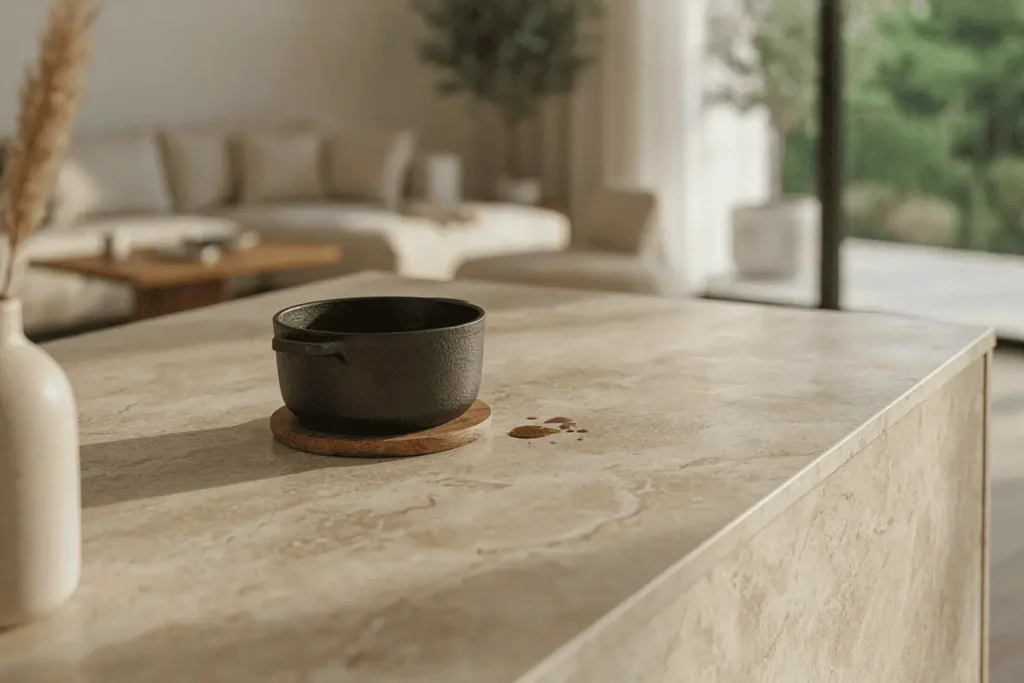
  • Heat resistance: Because it’s fired at high temperatures when it’s made, it handles hot pots and pans better than resin-based quartz. You should still use a trivet, but a quick slip is far less likely to leave a mark.
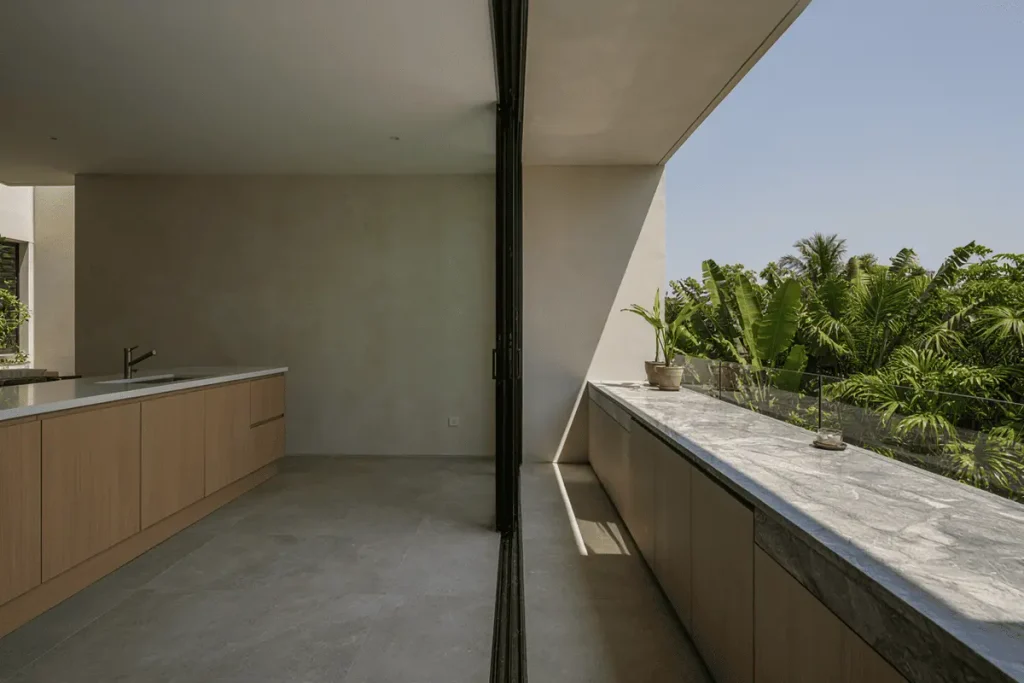
  • Sunlight and outdoor use: It’s UV-resistant, so the colour holds on balconies, in outdoor kitchens and in kitchens with strong afternoon sun. Quartz is better kept indoors.
  • Scratch resistance: The surface is very hard and tends to resist scratches well, though you should still use a chopping board.
  • Large, seamless slabs: The large format means fewer joints on a long countertop, and you can carry the same slab up the wall as a backsplash.

For a home that cooks with a lot of heat or wants the same material inside and out, these points can be a real deciding factor. They matter most when your lifestyle actually uses them, though. If you cook lightly and your kitchen sits away from the window, you may never test sintered stone’s heat and UV advantage at all.

Where Quartz Still Wins

It would be unfair to call sintered stone the clear winner, because quartz has real strengths of its own. It’s a proven material with a long track record in Singapore homes, and it comes in a huge range of colours and patterns. Many homeowners also like its consistent, uniform look, with patterns that stay the same from one slab to the next. Established brands such as Cambria, Luxora and Quarella offer plenty of choice, from soft whites to bold dark shades. It’s also generally easier to cut and shape, which means more decorative edge profiles and more installers who are comfortable working with it.

Quartz is also very low fuss. It’s non-porous, so it resists stains from oil, sauces and coffee, and like sintered stone it doesn’t need sealing. For a typical indoor kitchen where heat and sunlight aren’t major concerns, quartz is often the more practical and budget-friendly option, especially if your layout is complex or you want a more detailed edge.
How to Decide for Your Own Home

The easiest way to settle the question is to think about how you actually live. Ask yourself a few simple questions:

  • Do you cook with high heat most days? If so, sintered stone gives you extra peace of mind.
  • Does your kitchen get strong sunlight, or open onto a balcony? Sintered stone holds its colour better under UV.
  • Do you want a very specific colour or a decorative edge? Quartz usually offers more choice.
  • Is your layout complicated, with many cutouts or corners? Quartz can be easier to fabricate.
  • What’s your budget? Prices overlap a lot, so it’s worth comparing quotes for your actual measurements.

If most of your answers point in one direction, you probably have your winner. If your answers are split down the middle, don’t worry. That usually means both materials would serve you well, and the decision can come down to which one you simply like looking at more.

Things Worth Checking Before You Buy

Whichever material you lean towards, a few simple steps will help you avoid surprises. Always view and touch real samples, since colours can look different under showroom lights and at home. Choose an established brand for consistent colour and thickness, and ask your installer whether they’ve worked with the material before, because sintered stone slabs are dense, large and heavy. It also helps to share your measurements and describe how you cook, so your supplier can point you to the right surface from the start. Finally, think long term: a future balcony kitchen or a growing family might change what you need in a few years.

Sintered stone isn’t automatically better than quartz, but it is better suited to certain homes. If you want top performance with heat and sunlight, or a large seamless look that runs from the countertop to the backsplash, it’s a great choice. If you value flexibility, colour range and easier fabrication, quartz remains a reliable favourite that has proven itself in Singapore kitchens for years.

The good news is that you can’t go far wrong with either one, as long as you choose a reputable brand, view the real slabs and work with an installer who knows the material. The best surface is the one that suits the way you cook, the light in your kitchen and the look you want to live with every day.

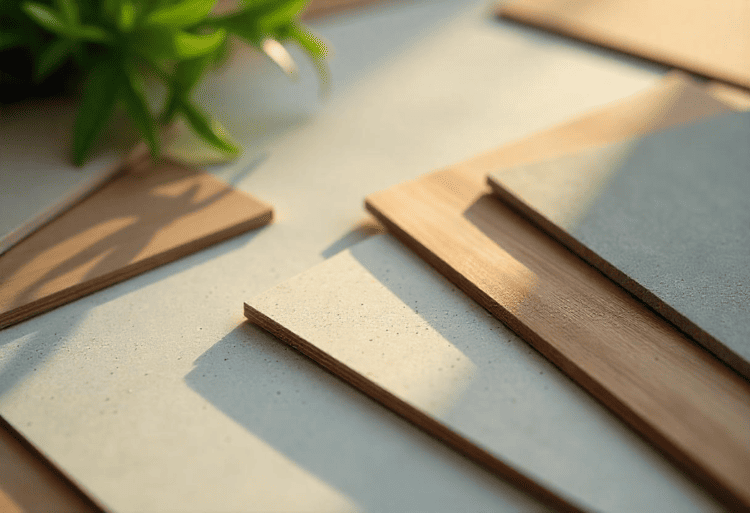
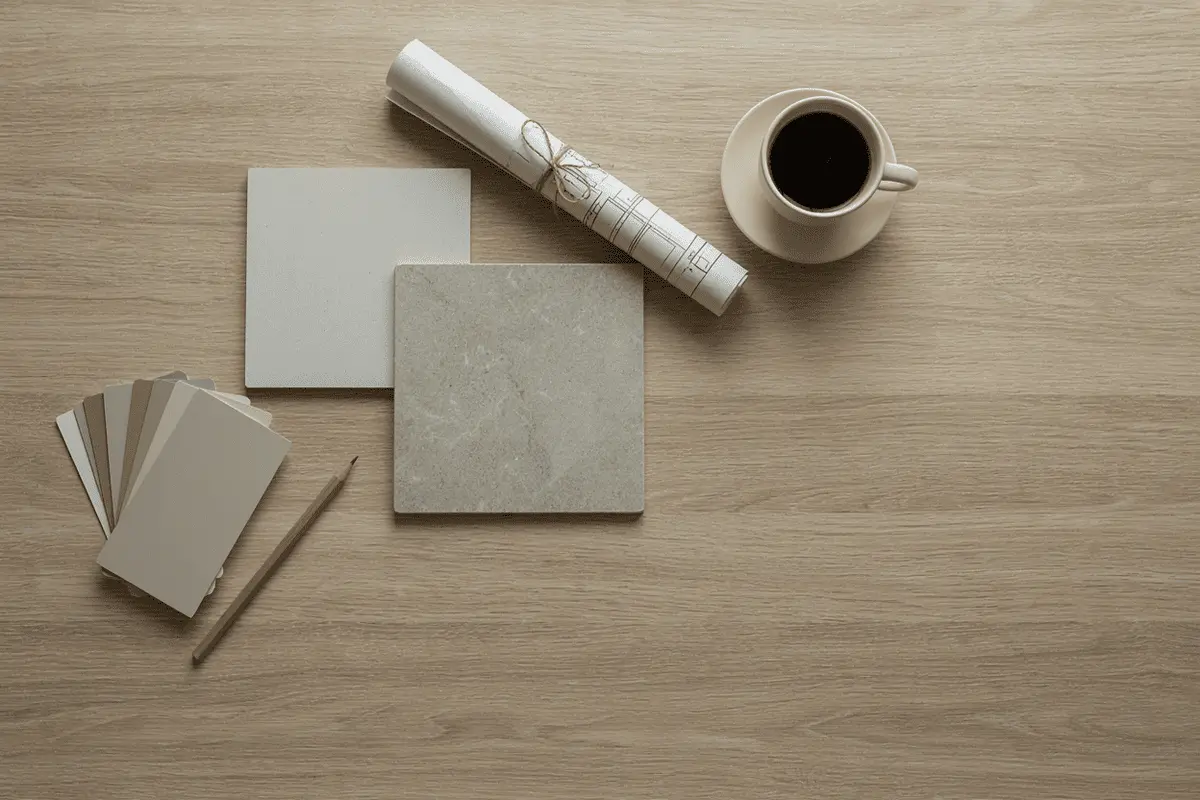
Not sure which way to go? Bring your kitchen plan to Polybuilding, and our team will lay out quartz and LAMINAM sintered samples for you to compare against your own cabinet and flooring colours.

Quartz vs Sintered Stone, What’s the Real Difference?

Walk into any stone showroom today and you’ll hear the same question from homeowners: should I go for quartz or sintered stone? Both are popular for kitchen countertops, vanities and wall features, both look great, and both promise low maintenance. So what actually separates them? If you’re stuck on quartz vs sintered stone, this guide breaks down the real differences in plain language, so you can pick the one that fits the way you live.

How They’re Made

The easiest way to understand the difference is to look at what’s inside. Engineered quartz is made mostly from crushed natural quartz, which is mixed with resin and pigments and then pressed into slabs. The resin acts as the binder and gives quartz its smooth, flexible, easy-to-work character. Quartz has been a favourite in Singapore kitchens for years, so it’s a familiar and well-tested option.

Sintered stone takes a different route. It’s made from natural minerals such as silica, feldspar and clay, which are pressed under very high pressure and fired at extreme heat until they fuse into one dense slab. There’s no resin at all. That single difference explains most of what follows, from how each surface handles heat to how it behaves outdoors. At Polybuilding, for example, you’ll find engineered quartz from brands like Cambria, Luxora and Quarella, and large-format sintered slabs from LAMINAM, so it’s easy to compare both under one roof.

Quartz vs Sintered Stone in Everyday Life

Here’s how the two compare on the things that matter most once the renovation is over:

  • Heat: Sintered stone handles high heat very well because it’s fired at high temperatures during manufacturing. Quartz can cope with normal cooking, but the resin makes it more sensitive to a very hot pot placed straight on the surface, so a trivet is a must.
  • Stains: Both are non-porous and resist staining from oil, sauces, coffee and wine, and neither needs sealing. Sintered stone has a slight edge with harsh stains like turmeric and dark spices, though a quick wipe works on both.
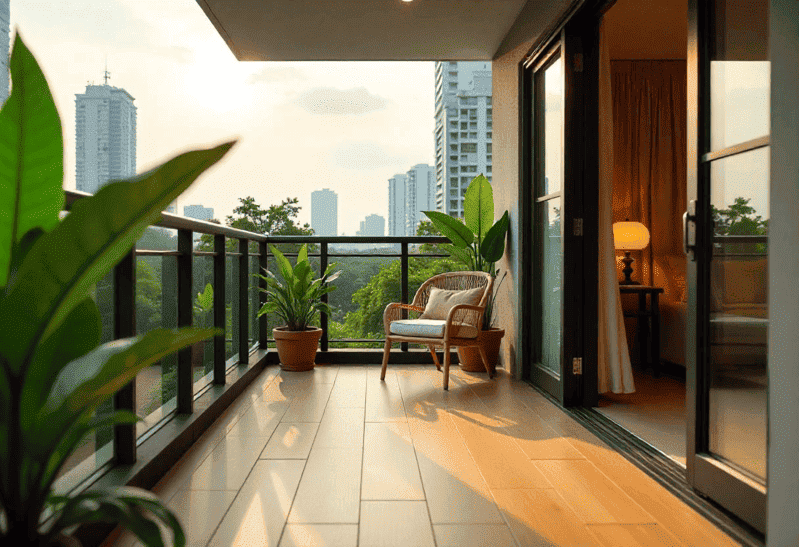
  • Sunlight and outdoor use: Sintered stone is UV-resistant and keeps its colour on balconies and in outdoor kitchens. Quartz is best kept indoors, since long exposure to strong sun can cause the resin to fade or yellow over time.
  • Scratches: Both are hard and durable, but sintered stone tends to be more scratch-resistant. You should still use a chopping board with either one.
  • Appearance: Quartz offers a huge range of colours and a consistent, uniform look. Sintered stone is excellent at copying marble, travertine and concrete, often with more natural-looking veining and large slabs that run with fewer joints. Both come in polished and matte finishes, so the look you want is rarely out of reach.
  • Fabrication and edges: Quartz is generally easier to cut and shape, so decorative edge profiles are more widely available. Sintered stone is denser and needs experienced fabricators and the right tools, and some edge styles are harder to achieve.
  • Cost: Prices overlap a lot and depend on brand, thickness, design and installation. Good-quality quartz and sintered stone often sit in a similar range, so it’s best to compare quotes based on your own layout.

Which One Should You Choose?

There’s no single winner, because the better choice depends on your home and your habits. Quartz is a smart pick if you want a wide range of colours, more edge options and a surface that’s friendly to fabricate. It’s a proven all-rounder that works very well in most indoor kitchens and bathrooms, and it’s often the more comfortable choice for a tighter budget or a complex layout. Day to day, it’s also very low fuss, with no sealing and only a soft cloth and mild soap needed to keep it clean.

Sintered stone makes more sense if you cook with high heat every day, have a kitchen that gets strong sunlight, or want to extend the same material to a balcony, outdoor kitchen or feature wall. It’s also a good fit if you love the idea of a large, seamless slab that runs from countertop to backsplash with very few joints. In bathrooms, both work well on vanities, but sintered stone’s large slabs can also clad walls and shower areas for a clean, low-grout look in humid spaces.

If you can’t decide, think about the one thing you’d hate most to deal with. For some people that’s a heat mark, for others it’s a difficult installation or limited design options. Answering that honestly often settles the debate. Neither is a bad choice, so the real goal is a good match, not a perfect material.

Things to Check Before You Commit

Whichever material you lean towards, a few simple steps will help you avoid surprises:

  • Look at real samples: Colours and finishes can look very different under showroom lights and at home, so view and touch the actual slabs.
  • Ask about the brand: Established brands offer more consistent colour, thickness and quality from slab to slab.
  • Confirm the installer’s experience: Sintered stone in particular needs a fabricator who has worked with large, dense slabs before.
  • Think long term: Consider how your needs may change, such as a future outdoor kitchen or a growing family, and pick the surface that will still suit you in ten years.
  • Share your measurements: The cost and number of slabs depend on your layout, so a proper quote is the only way to compare accurately. It also helps to tell your supplier how you cook and how much sun your kitchen gets, so they can point you to the right surface from the start.

Making the Choice Easier

Both are strong, long-lasting surfaces, and many homeowners are happy with either. The right one is simply the one that matches your cooking style, your design taste and your budget.

Still on the fence? Come by Polybuilding and see our quartz and LAMINAM sintered slabs side by side. Seeing and touching them together is often the quickest way to know which one feels right for your home. Our team can explain the trade-offs honestly, whichever material turns out to be the better fit.

Is a Sintered Stone Kitchen Top Worth It in a Singapore Home?

Kitchens in Singapore work hard. Between high-heat wok cooking, curry splashes, humid weather and the occasional spilled kopi, your countertop gets tested every single day. That’s why a sintered stone kitchen top has become such a popular choice for new builds and renovations alike. But does it really live up to the buzz? Here’s what you should know before you decide, from how it performs to what to plan for when you order.

Why It Suits a Singapore Kitchen

The biggest reason homeowners choose sintered stone is how well it handles heavy cooking. The slabs are fired at very high temperatures during manufacturing, so they cope with heat far better than resin-based surfaces. You should still use a trivet for a pot straight off the stove, but a quick slip is unlikely to cause damage.

Stains are the next concern. If you cook with turmeric, soy sauce, chilli or dark spices, you already know how stubborn some marks can be. Sintered stone has a dense, non-porous surface, so liquids sit on top instead of soaking in. A quick wipe is usually all it takes, and there’s no sealing schedule to keep up with. In a humid climate, the lack of pores also means fewer places for mould and mildew to settle, which keeps the surface more hygienic.

Compared with engineered quartz, which uses resin, sintered stone tends to be more forgiving with heat and sunlight. That matters if your kitchen gets strong afternoon light through the window or opens onto a balcony. Compared with natural stone like marble, it’s also far less fussy about acids and stains, so everyday cooking is a lot less stressful.

It’s also a comfortable fit for the way many of us live. In open-concept HDB and condo layouts, the kitchen is often part of the living space, so the countertop needs to look good as well as work hard. A clean, continuous surface keeps the whole area looking tidy, even after a long cooking session.

Design Choices: Colour, Finish and Edges

Modern sintered stone is available in a wide range of looks, so you don’t have to give up style for performance. Popular options include:

  • Marble-style slabs: Soft veining that gives you a luxury look without the worry of etching from lemon juice or cleaners.
  • Travertine and natural stone looks: Warm, earthy tones that suit Scandinavian, Japandi and modern minimalist homes.
  • Concrete and metal-inspired finishes: Muted, industrial tones that work well in contemporary kitchens.
  • Plain solid colours: Clean whites, greys and blacks that make cabinets and fittings stand out.

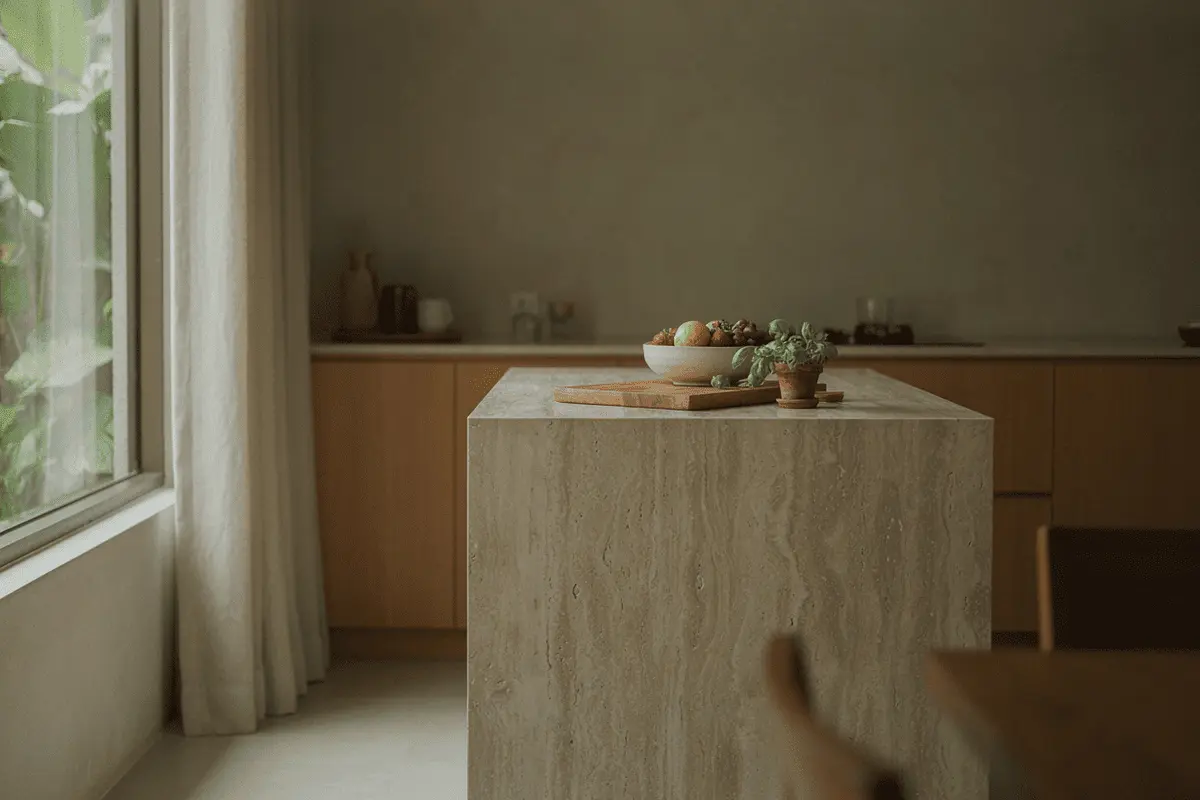
Because the slabs come in large formats, you can often cover a long countertop with fewer joints. Many homeowners also run the same slab up the wall as a backsplash, or wrap it around an island in a waterfall edge for a seamless, high-end look. Finishes range from glossy to matte, so you can choose between a bright, reflective surface and a soft, low-glare one. Thickness also changes the look: slimmer slabs give a sleek, modern profile, while built-up edges create a bolder, chunkier countertop. If you’re unsure, ask to see a few options side by side with your cabinet colour and flooring, since the right combination matters more than any single slab.

What Affects the Cost

Pricing for sintered stone varies quite a bit from one project to the next, so it’s better to understand what drives the quote than to chase a single number. The main factors include:

  • Brand and design: Established brands and more complex patterns usually cost more.
  • Thickness: Thicker slabs and built-up edges use more material.
  • Size and layout: The more slabs you need, and the more offcuts left over, the higher the cost.
  • Edge profile: Simple edges are more straightforward, while decorative profiles take extra work.
  • Cutouts and installation: Openings for the sink and hob, plus delivery and fitting, all add up.

The easiest way to get an accurate figure is to share your kitchen measurements and layout with your supplier and ask for a proper quote.

Tips Before You Order

A little planning goes a long way, especially because sintered stone slabs are dense, large and heavy. Keep these points in mind:

  • Confirm your layout first: Settle your sink, hob and cabinet plan with your designer or contractor before the slab is cut.
  • Decide on joints early: Talk about where seams will fall so they sit in the least noticeable spot.
  • Check your cabinets: Make sure the carcasses are sturdy enough to support the weight.
  • Choose a softened edge: A slightly rounded edge is less likely to chip in a busy family kitchen.
  • Use an experienced fabricator: Cutting and installing sintered stone needs the right tools and know-how.
  • See a real sample: Colours can look different under showroom lights and at home, so view and touch the actual slab.

Care and Everyday Use

Living with sintered stone is refreshingly easy. Wipe spills with a soft cloth and mild soap, then rinse with water. You don’t need special cleaners, and you won’t have to reseal it. Just avoid hitting the edges with heavy cookware, and use a chopping board to protect your knives. A quick daily wipe and the occasional deeper clean with a non-abrasive cleaner are enough to keep it looking fresh for years. It also holds up well to the daily knocks of family life, from school bags on the island to a pot being set down in a hurry.

Making the Right Call for Your Kitchen

If you cook often, want a surface that handles heat and stains, and like the clean look of large, seamless slabs, then it’s well worth considering. It isn’t the cheapest option, and it does need a skilled installer, but for many Singapore homes the low upkeep and long-lasting good looks make it a smart investment that looks as good in year ten as it did on day one.

Planning a kitchen renovation? Send your measurements and floor plan to Polybuilding, and we’ll help you shortlist slab designs from our LAMINAM range and work out what your layout needs.

What Is Sintered Stone Made Of? A Look Inside the Slab

You run your hand across a smooth, cool countertop and it feels just like stone, but it looks a bit too perfect to have come straight out of a quarry. So what is sintered stone made of, and why does it behave so differently from marble, granite or quartz? If you’re comparing surfaces for your kitchen or bathroom, knowing what’s inside the slab makes it much easier to understand why it performs the way it does.

The Main Ingredients

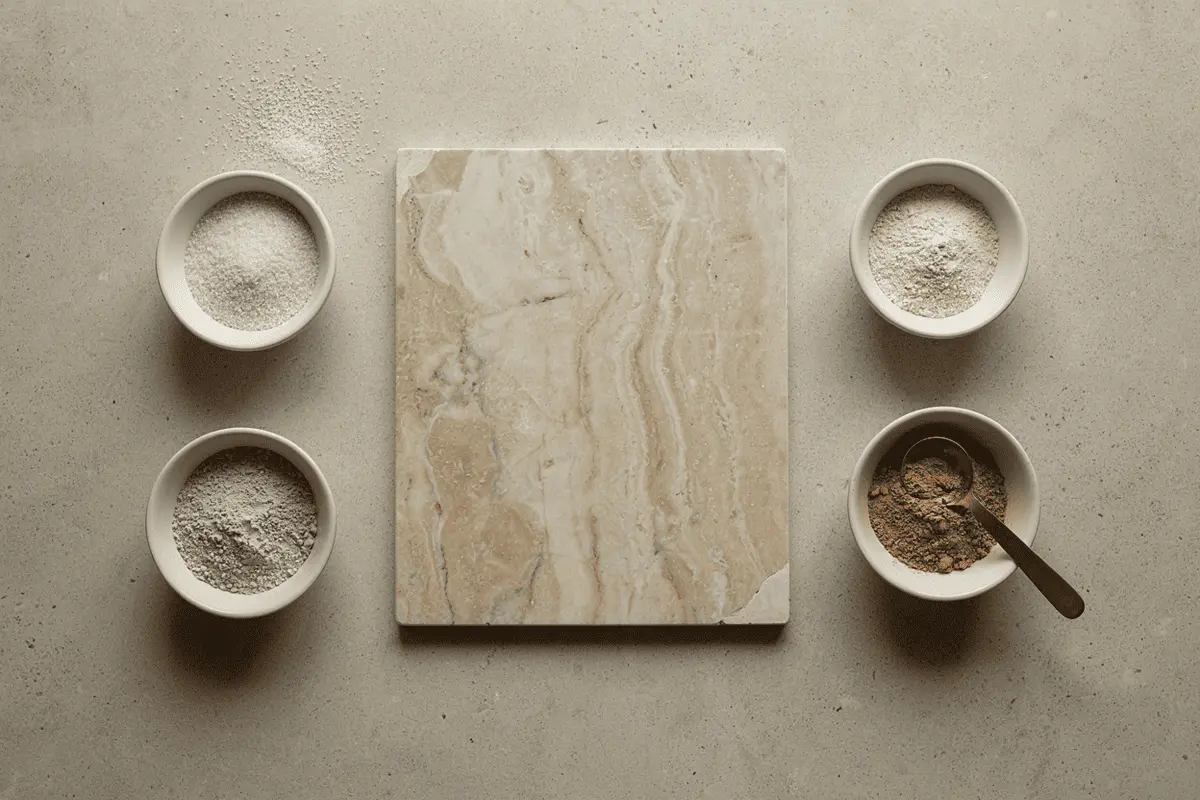
Sintered stone is made almost entirely from natural minerals. There are four main building blocks:

  • Silica and quartz sand: This forms the hard, durable backbone of the slab and gives it strength and scratch resistance.
  • Feldspar: A natural mineral that melts at high temperature and acts like glue, helping all the particles fuse together without any added resin.
  • Clay: Helps the powder hold its shape when pressed and adds to the slab’s density and stability.
  • Mineral pigments: Natural oxides that give each slab its colour, from soft whites and warm travertine tones to deep charcoal and bold veining.

Some manufacturers also add recycled mineral material to the mix, though this varies by brand. What matters is that there’s no resin binder holding everything together, which sets sintered stone apart from engineered quartz. Each ingredient does a specific job, and the balance between them is what gives a good slab its strength, its colour and its smooth finish.

How the Ingredients Become a Slab

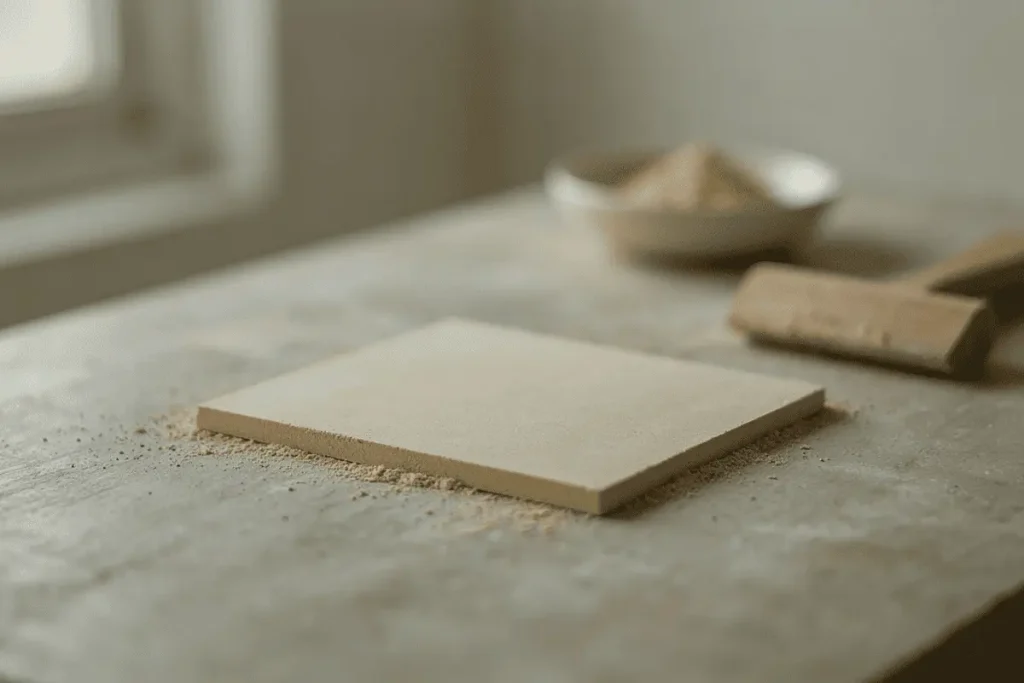
Having the right minerals is only half the story. The way they’re processed is what turns loose powder into a surface strong enough for a busy kitchen. The process usually goes like this:

  • Grinding and blending: The raw minerals are ground into very fine powder and mixed in carefully measured amounts, so that every batch is consistent.
  • Pressing: The powder is compacted under enormous pressure, which squeezes out air and packs the particles tightly together into a flat slab.
  • Decorating: Modern printing methods apply the colours and patterns, whether that’s marble veining, travertine texture or a plain concrete look.
  • Firing: The slab goes into a kiln and is fired at extremely high temperatures, well above 1,000°C. This is the sintering step, where the particles fuse into one dense, solid piece.
  • Cutting and finishing: Once cooled, the slab is trimmed and given its final finish, such as polished, matte or textured.

Think of it as baking, just on an industrial scale. The pressure packs everything tightly, and the heat locks it all in place for good. Because every step is carefully controlled, a well-made slab ends up with the same thickness, colour and strength from one edge to the other.

Why the Ingredients Matter

Once you know what goes into a slab, the benefits make a lot more sense. Because there’s no resin, there’s nothing in the surface that softens or discolours under heat or long exposure to sunlight, which is why sintered stone is often used on balconies and for outdoor cladding. The firing process also leaves a dense, non-porous surface, so oil, sauces and spills have very little chance to soak in. That’s good news for busy Singapore kitchens, and it also means the surface doesn’t need sealing the way many natural stones do.

Compare that with engineered quartz, which is mostly crushed quartz bound together with resin and pigments. It’s a great material, but the resin is the part that’s more sensitive to high heat and strong UV. Granite and marble, on the other hand, come straight from the earth, so each slab is unique but can have natural pores, fissures and weak spots. Sintered stone sits somewhere in between: natural minerals like stone, but made in a controlled way, so the result is more consistent. For a family that cooks daily or loves entertaining outdoors, that predictability is a big part of the appeal.

Is It Natural or Man-Made?

The honest answer is both. The raw materials are natural, but the slab itself is manufactured, which is why it’s called an engineered surface. There’s one more thing worth knowing. Like granite and quartz, the minerals contain silica, and cutting or grinding the slab can create fine dust. That’s a workshop concern and not something you’ll face at home. A responsible fabricator uses wet cutting and proper protection, and once installed, the finished surface is completely stable and safe for everyday use, including food preparation.

What to Look for When Buying

Since quality depends so much on the ingredients and process, it’s worth being a little picky:

  • Choose an established brand: Reputable manufacturers control their raw materials and firing closely, so colour and thickness stay consistent from slab to slab.
  • Ask about the composition: A good supplier can tell you what the slab is made of and whether any resin is used.
  • Check the fabrication: Dense slabs need experienced installers with the right tools, so ask who will cut and install it.
  • See a real sample: Always look at and touch the actual slab, since printed colours can look different under showroom lights and at home.

The Simple Recipe Behind a Tough Surface

In short, it’s made of natural minerals like silica, feldspar and clay, plus mineral pigments, pressed together and fired at very high heat until they fuse into one dense slab. No resin, no sealing, and a surface built to handle heat, stains and sunlight. That simple recipe is the reason it has become such a popular choice for modern kitchens, bathrooms and outdoor spaces.

If you’d like to see and feel the difference for yourself, drop by Polybuilding and our team will gladly show you our LAMINAM sintered slabs in person and help you find the right fit for your home.

What Is a Sintered Stone? A Simple Guide for Singapore Homes

If you’ve been shopping for a new kitchen countertop, chances are you’ve heard the term “sintered stone” more than once. Sales reps say it’s tough, low maintenance and good-looking, but what is sintered stone exactly, and is it a good fit for a Singapore home? Whether you’re renovating an HDB flat, upgrading a condo kitchen or planning a new build, here’s a simple guide to help you decide before you head to a showroom.

Sintered Stone, Explained

Sintered stone is an engineered surface made from natural minerals such as quartz, feldspar, silica and clay, plus natural pigments for colour. These minerals are pressed together under very high pressure and fired at extreme heat. This process is called sintering, and it fuses everything into one dense slab without needing resin to hold it together. Think of it as nature’s rock-making process, just sped up. The result is a very hard, compact surface that can be made to look like marble, travertine, concrete or even wood.

You may also hear it called an ultra-compact surface or a large-format slab. At Polybuilding, you’ll find it under Large Format Sintered Slabs, including the LAMINAM range from Italy. It’s often compared with engineered quartz, but the two are made differently. Quartz is mostly crushed stone held together with resin, while sintered stone has no resin at all, which is why it handles heat and sunlight in a different way. Because it’s made in a controlled factory setting, each slab also tends to be more consistent than a piece of natural stone, with fewer surprise veins or weak spots running through it.

Why Homeowners Are Choosing It

The biggest draw is how well it copes with real life. Anyone who cooks Asian food knows the panic of a hot wok with nowhere to put it down. Because sintered stone is fired at high temperatures during manufacturing, it handles heat far better than resin-based surfaces. You should still use a trivet, but one quick slip is unlikely to leave a mark. The surface is also dense and non-porous, so oil, soy sauce, turmeric, coffee and wine have little chance to soak in. Wipe it down and you’re done, and there’s no sealing needed, which is one less chore compared with marble and some granites. For busy households, that kind of low-fuss upkeep matters more than most people expect.

It also looks good and stays that way. Modern printing and finishing techniques let sintered stone copy marble veining or travertine texture very convincingly, so you get the look of natural stone without worrying about lemon juice or cleaning products etching the surface. Finishes range from polished and glossy to soft matte, so you can pick whatever suits your home. Because it’s UV-resistant, it also holds its colour in strong sunlight, which makes it a good match for balconies, outdoor kitchens and even exterior cladding where other surfaces might fade or yellow over time. In a tropical climate like ours, with intense sun and frequent rain, that staying power is a real advantage.

Where It Works Best in a Singapore Home

Sintered stone is flexible, but some spots make more sense than others:

  • Kitchen countertops and islands: Tough enough for heavy cooking and easy to wipe clean after a long day. The large format also means fewer seams across a long countertop.
  • Backsplashes, bathroom vanities and feature walls: Large slabs mean fewer grout lines to scrub, and the non-porous surface suits humid bathrooms where mould and mildew can build up in the gaps.
  • Balconies and outdoor areas: UV stability makes it a good match for sunny spots that get a lot of weather.
  • Flooring: It works in living and outdoor areas, but check thickness and installation method with your supplier first.

For HDB and condo owners, the large format is a bonus in compact kitchens. Fewer joints make a small space feel cleaner and more open, and a continuous surface from countertop to backsplash can make the whole room look bigger than it is.

How It Compares and How to Care for It

Each material has its place, so it helps to know where sintered stone fits. Engineered quartz is a great all-rounder with plenty of edge and fabrication options, but the resin means it can be more sensitive to heat and long-term sun exposure. Granite brings natural character and handles heat well, though many types need regular sealing to stay protected from stains. Porcelain tiles are budget-friendly and practical for floors, but smaller tiles mean more grout lines to clean. Sintered stone is the one to look at if you want strong heat and UV performance with large, clean surfaces.

Care is simple too. Wipe spills with a soft cloth and mild soap, then rinse with water. There’s no sealing schedule to remember and no special products to buy. Just avoid dragging heavy pots across the surface, and keep a chopping board handy for your knives. A little common sense will keep it looking new for years.

What to Know Before You Buy

No material is perfect, so here are a few things to keep in mind before you decide:

  • Edges can still chip: The surface is hard, but a sharp edge can chip under a heavy knock. A softened edge profile helps, especially in busy family kitchens.
  • Fabrication needs experience: The slabs are dense, large and heavy, so choose an installer who has worked with sintered stone before. Some decorative edge profiles are also harder to achieve than with quartz or granite, so it’s worth discussing the design early.
  • Go for established brands: Look for consistent colour and thickness across batches, and always ask to see and touch a real sample, since colours look different under showroom lights and at home.

Final Thoughts: So, What Is Sintered Stone Really?

Simply put, it’s a tough, mineral-based surface that gives you the look of natural stone with better resistance to heat, stains and sunlight. For busy kitchens, humid bathrooms and sunny balconies in Singapore, that makes it a very practical choice.

It isn’t the right pick for every home, but it’s well worth a look if you want large, clean surfaces with very little upkeep. If you’d like to see how it looks and feels in real life, drop by Polybuilding and our team will gladly walk you through our LAMINAM sintered slabs.

A Guide to Matching Tiles With Wood, Stone, and Other Natural Elements

Keep It Natural, Not Messy

So you’re renovating. Maybe it’s your first home, maybe you’re giving the old place a facelift. Either way, at some point you’ll hit this common headache: how to mix tiles with wood, stone, and all those natural finishes you love.

You walk through showrooms, scroll Pinterest, flip through renovation forums. But still… you squint at the samples and ask yourself: “Does this go with that?”

We get it. In Singapore, where homes are compact and humid, and every square foot counts, mixing materials isn’t just about looks. It’s about making sure everything feels cohesive — and tahan.

Here’s a local, no-fluff guide to getting your tile-and-natural-material combo right.

Don’t Try Too Hard to “Match”

First thing first — forget the idea that everything needs to “match”. If you’ve got timber floors, you don’t need your wall tiles to be the exact same brown. In fact, that can make things look a bit… flat. Too uniform.

Instead, go for complement, not copy.

For example:

  • Light oak flooring? Try warm-grey or sand-coloured tiles to bring out contrast.
  • Dark walnut cabinets? Balance with cream or off-white tiles to lighten the space.

In Singapore flats where natural light isn’t always the best, this kind of contrast adds depth. Makes the space feel more layered.

Textures Are Your Best Friend

One thing many people overlook: texture.

Here in Singapore, with our heat and humidity, you don’t just want things to look nice — you want them to feel right. Smooth-on-smooth surfaces can look sterile, especially under our warm lights.

So think about mixing things up:

  • Got matte timber panels? Pair with slightly glossy tiles for contrast.
  • Stone-look tiles with a bit of grit? Balance with smooth laminate or woodgrain.

And if you’re doing up a bathroom, especially in an HDB, textured tiles can help prevent slips too. Style plus safety — win-win.

Always Check the Undertones

Now this one catches a lot of people.

You think you’re buying a “neutral” tile, but under your actual home lighting, it starts looking oddly yellowish. Or pinkish. Or green.

That’s because of undertones — and in Singapore’s lighting (especially if you’re using warm LED bulbs), they really show up.

So when you’re mixing natural materials:

  • Wood with yellow undertones? Stick to tiles with warm, earthy bases — not blue-grey.
  • Marble with cool undertones? Avoid reddish or orangey timbers.

Bring samples home. View them in daylight and under your night lighting before you commit. Better to be extra fussy now than regret for the next 10 years.

Use Tiles to “Frame” Your Natural Elements

If you’re using a standout natural material — like a real wood dining table, stone feature wall, or even rattan doors — let it shine.

Your tiles shouldn’t compete. They should frame.

Think of it like this:

  • A bold stone vanity? Keep your wall tiles clean and simple.
  • Got a nice teak TV console? Use muted flooring tiles so the wood doesn’t get “lost”.

Too many competing textures or colours in a small Singaporean space = visual chaos. A bit of restraint goes a long way.

Indoor to Outdoor — Keep It Flowing

A lot of us love having that little balcony space, even if it’s tiny. If you’re lucky enough to have one, think about how your indoor flooring connects to the outdoor.

Use wood-look tiles inside and timber decking outside? Great. Make sure the tones are cousins, not strangers.

Even better — some tiles are rated for both indoor and outdoor use. That way, you can run the same tile from your living room out to your balcony, making everything feel more open.

Just make sure it’s slip-resistant. Balcony accidents aren’t fun, especially after rain.

Practical > Pretty (Sometimes)

Sure, we all want the showroom look. But be honest — are you going to mop every two days? Will your kids spill stuff? Do you cook often?

Real wood is gorgeous. But in a wet kitchen or bathroom? High maintenance. Natural stone is classy, but it can stain or etch if not sealed well.

If you love the look but not the upkeep, consider:

  • Wood-look porcelain tiles (they’ve come a long way!)
  • Marble-look or travertine-look tiles — easier to clean, just as elegant

Singapore homes are built for living, not just looking nice in photos. Don’t let high maintenance finishes stress you out.

Some Singapore-Specific Considerations

Just a few extra local notes worth mentioning:

  • Space is tight, so lighter tones can help open things up. But too much white can feel cold — mix in warm wood or stone accents.
  • Air-con and humidity can mess with some natural materials. Always check with your supplier about long-term performance.

Renovation permits: If you’re in an HDB, remember not all stone tiles are allowed on walls (because of weight). Always check the guidelines before buying.

Final Word: Don’t Be Afraid to Ask

At the end of the day, this is your space. Your home. No one else is going to live in it but you (and maybe your mother-in-law if you’re lucky).

So if you’re unsure about how to match things up — go to a proper tile supplier. Ask questions. Bring your samples. Look at them under proper lighting. And don’t be shy about mixing materials — just do it with intention.

If you’re still piecing things together or not quite sure what works with what, feel free to drop us a message. At Polybuilding, we’re always happy to chat, show you around, and help you find something that fits — no pressure, just good advice and plenty of samples to explore. Good design isn’t about following rules — it’s about creating a space that feels like you.