Natural Stone in HDB & Condo Renovations: A Good Choice?

Is Natural Stone a Solid Choice—or a Heavy Mistake?

Natural stone feels incredibly extravagant, looks gorgeous, and sounds fancy. You’ve seen it in boutique hotels, cafes, and showflats, and now you’re thinking if you should incorporate it into your own HDB or condo renovation.

The quick response? It varies. While there are benefits to natural stone, there are also certain things you should think carefully about before committing. Let’s analyze it.

What Exactly Is Natural Stone?

Let’s agree before discussing the advantages and disadvantages. “Natural stone” refers to a variety of materials. It consists of: 

  • Marble – timeless and refined
  • Granite – strong and long-lasting.
  • Limestone & Travertine – more textured and rustic
  • Slate – rugged and slip-resistant
  • Onyx – translucent and dramatic

The choice is more complicated than simply deciding, “Do I want stone or not?” because each of these stones has a unique personality.

Why Homeowners Love It

1. It Looks Gorgeous

Something is amazing about natural stone. Stone immediately improves a room, whether it’s a granite kitchen countertop or a marble feature wall. Because no two pieces are precisely the same, your house seems genuinely distinctive.

2. It’s Durable (Mostly)

Stone is tough, especially slate and granite. It can withstand normal wear and tear, and in certain situations, it even gets better with age. Stone surfaces that are properly sealed can endure for decades.

3. It Adds Property Value

In the long run, natural stone can be a wise investment. It adds a high-end finish to your house, which could increase its future selling value.

HDB Considerations: What You Need to Know

If you live in an HDB flat, there are some extra things to consider:

1. Weight Restrictions

Since HDB flats have load limits, natural stone is hefty. This implies that unless you choose thinner tiles or engineered substitutes like crushed marble or stone-look porcelain, you might not be able to use some stones for flooring or feature walls.

2. Wet Area Guidelines

Non-slip materials are frequently needed in kitchens and restrooms. Despite its stunning appearance, highly polished marble can be a trip hazard. For humid areas, you must choose textured or honed finishes.

3. Noise and Vibration

Heavy counters or thicker stone tiles may increase noise levels or have an adverse effect on the structural integrity of your apartment. If you share walls or floors with your neighbors or are on a higher floor, use caution.

Condo Renovations: More Flexibility, But Still Some Limits

Although you usually have a little more freedom with condos regarding design and materials, there are still a few things to look for:

  • Management Approval: Certain MCSTs (Management Corporation Strata Title) have favored contractors or particular rules.
  • Lift Access: If you want to move big stone slabs into your apartment, you may need to schedule a lift or, if the slab is too big, a temporary platform.
  • Noise Regulations: Stone installation and cutting can be noisy. Certain condos only permit remodeling to take place during specific hours.

So before you fall in love with a particular stone slab, make sure the logistics check out.

Where Natural Stone Works Best in Smaller Spaces

The good news is that you don’t have to cover your entire house in stone to appreciate its beauty if money or functionality are concerns. A few excellent use cases are as follows:

  • Granite or sealed marble countertops for the kitchen
  • Marble bathroom vanity tops that have been properly sealed
  • Accent walls in the foyer or living room
  • If load permits, flooring in arid spaces such as corridors or bedrooms
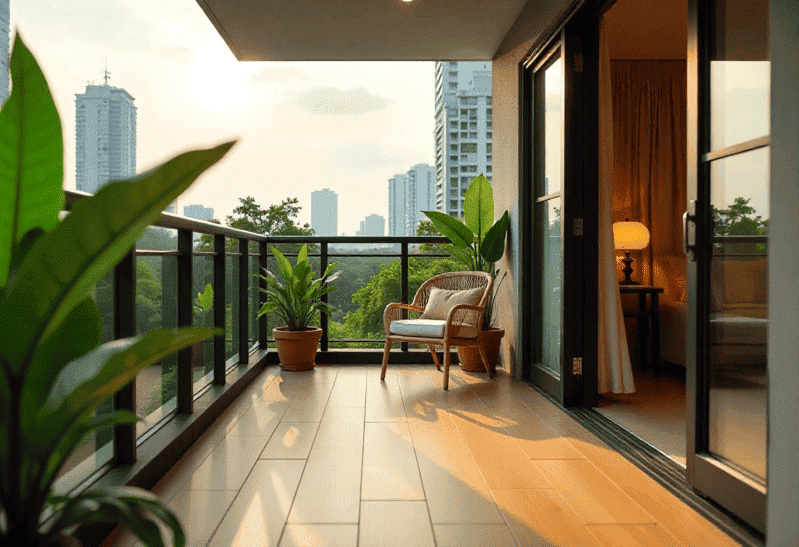
  • Balconies (slate or alternatives that don’t slip)

Stone can have the biggest impression in modest amounts without breaking the bank on your makeover.

Pro Tip: Consider Compressed or Engineered Stone

Compressed stone or manufactured quartz may be worth looking into if you like the appearance of stone but would want something more affordable and HDB-friendly. These materials have patterns that are more constant, are easier to maintain, and typically need fewer installation hassles than natural stone.

So… Is It a Good Choice?

In conclusion, natural stone might be a great option for your HDB or condo, but only if you approach it with an open mind.

Although it is elegant, classic, and long-lasting, it does have certain logistical issues, maintenance requirements, and financial implications. It might be the ideal fit for your house if you’re willing to put in some maintenance and appreciate the appearance of something genuinely unique.

Thinking of Natural Stone Flooring? 5 Key Things to Know

Hard Floors, Hard Truths: The Natural Stone Truth They Don’t Tell You

So you’re thinking about installing natural stone flooring in your house or place of business? Excellent decision! A space instantly gains character, charm, and timeless appeal from how a stone looks and feels. To ensure that you receive the desired outcome (and experience), it’s important to understand a few important factors before deciding on slabs and tile designs.

Shall we break it down together?

Before deciding on natural stone flooring, consider these five factors.

1. Not All Stones Are Created Equal

When people hear the term “natural stone,” they frequently assume it refers to a single broad category. Every kind of stone has unique qualities, perks, and quirks.

Several popular choices are:

  • Marble: luxurious and sophisticated, but prone to stains and scratches.
  • Granite: Exceptionally strong and moisture-resistant. Excellent for places with lots of traffic.
  • Limestone: More porous and softer, it has an earthy or rustic feel.
  • Travertine: A timeless option with organic textures and pits that are best sealed.
  • Slate: An excellent choice for outdoor spaces or kitchens because it is inherently non-slip.

Pro tip: Think about the purpose of the space. A corridor with lots of traffic? Slate or granite might be preferable. A luxurious bathroom? If you’re willing to put up with a little more maintenance, marble might be your best option.

2. Natural Stone = Natural Variation

The fact that no two tiles are exactly alike is one of the main attractions of natural stone. You’ll get distinct veining, delicate color changes, and textures that are impossible to achieve with machine-made materials.

But here’s the flip side:

It’s possible that you won’t get the exact style you saw in the catalog or showroom. Your stone may be darker, lighter, or more veined than you anticipated, depending on the batch.

This organic diversity can be a deal-breaker—or the reason you adore it—if you are aiming for a consistent or simple style.

3. Stone Needs Some TLC (But It’s Worth It)

Natural stone flooring requires some upkeep. To prevent moisture, stains, and etching, some stones—particularly the more porous ones like marble and limestone—need to be sealed on a regular basis.

Here’s what you’ll need to keep in mind:

  • Sealing: Usually once a year, though certain items have extended lifespans.
  • Cleaning: Make use of cleansers with a neutral pH. Anything acidic, like as vinegar, should be avoided, especially on marble.
  • General maintenance: Avoid dragging bulky furniture, put mats in entryways, and clean up spills right away.

Although it seems like a lot, it’s actually quite doable if you settle into a routine. And the beauty in the long run? Well worth the work.

4. It Can Affect Your Budget (in More Ways Than One)

Let’s face it—natural stone flooring is an investment. Compared to alternatives like vinyl or ceramic tiles, the upfront material cost is typically higher. However, that is just one aspect of the situation.

What else could increase your budget?

  • Installation: Labor prices are usually greater because stone is heavier and more difficult to install.
  • Subfloor preparation: Your subfloor may require strengthening due to the weight.
  • Maintenance and sealing: Not extremely costly, but they do build up over time.

Although it seems like a lot, it’s actually quite doable if you settle into a routine. And the beauty in the long run? Well worth the work.

5. Think About Temperature and Texture

Let’s face it—natural stone flooring is an investment. Compared to alternatives like vinyl or ceramic tiles, the upfront material cost is typically higher. However, that is just one aspect of the situation.

Some other comfort considerations:

  • Underfloor heating: If necessary, you can enjoy that comfortable warmth beneath your feet thanks to stone’s compatibility with radiant heating.
  • Surface finish: Although polished stone has a sleek appearance, it can be slippery. More grip is provided by textured or honed finishes, which is particularly useful in outdoor or bathroom settings.

The takeaway? Consider more than just the appearance of your floor. Consider how it fits with your daily routine and how it feels under your feet.

Final Thoughts: Is Natural Stone Right for You?

Natural stone is something to think about if you’re looking for flooring that is stunning, classic, and long-lasting. Yes indeed, it costs more and requires slightly more attention. However, for many people, the advantages greatly exceed the disadvantages.

Just keep in mind:

  • Select the appropriate kind of stone for the area.
  • Establish reasonable expectations for maintenance and variation.
  • Work with an experienced installer
  • Spend money for long-term care.

Natural stone is a statement rather than merely a surface. You’ll be happy to live with it for many years if you make the right choice.

Marble vs Granite: Choosing the Right Stone

When it comes to selecting the ideal material for your countertops, flooring, or even wall features, two timeless options often top the list: marble and granite. Both are natural stones valued for their beauty, durability, and association with luxury—but which one is best for your home? In this post, we’ll explore the pros and cons of each material, where they work best, and the key factors to consider before you make a final decision. Whether you’re renovating a kitchen or designing a new bathroom, knowing the key differences between marble, granite, and even modern alternatives like poly granite tiles price can help you make a confident and informed choice.

What’s the Difference Between Marble and Granite?

Before we dive into comparisons, it’s helpful to understand what makes these stones distinct.

  • Marble is a metamorphic rock created from limestone by extreme heat and pressure. It has a soft, veined appearance and a smooth, almost buttery surface when polished.
  • Granite, on the other hand, is an igneous rock created from cooled magma. It contains minerals like quartz, feldspar, and mica, giving it a speckled, textured look.

They may both be stone, yet they behave—and age—very differently. For homeowners comparing natural and engineered options, checking the poly granite tiles price gives a useful benchmark for budgeting.

Appearance: Elegance vs. Texture

Marble: Classic and sophisticated

Marble has long been associated with luxury. Its delicate veining and flawless finish make it a favourite for refined interiors. Common colors include white and grey, though green, pink, and black are also available. It gives a softer, warmer feel to a space and is often used in bathrooms or as statement walls.

Granite: Bold and varied

Granite offers rich texture and color variety, from deep blacks to vivid blues and reds. Its flecked or sparkling patterns add strong visual interest. Granite works well in both traditional and modern settings, depending on the cut and finish.

If you’re exploring more budget-friendly options, checking poly granite tiles price can be helpful—they mimic the look of real granite while offering practical advantages in cost and maintenance.

Durability: Which Stone Is Tougher?

Granite Wins on Hardness

Granite is ideal for high-traffic areas like kitchen counters because it’s extremely robust and resistant to heat, chipping, and scratches.

Marble is Softer and More Sensitive

Marble is more porous and delicate. It’s prone to stains and etching, especially from acidic substances. While some homeowners appreciate the aged patina, others prefer a more durable option like granite or even poly granite tiles, whose price reflects their low-maintenance appeal.

Maintenance: How Much Work Are You Willing to Do?

Granite: Low maintenance

Granite is relatively low-maintenance. It is moisture and stain resistant when properly sealed (usually once a year). A quick wipe with mild soap and water is all it takes to keep it looking fresh and clean.

Marble: Needs regular care

Compared to marble, which demands more attention, as it typically needs to be sealed more frequently, as well as spills that should be cleaned up immediately to avoid staining. To avoid etching, use pH-neutral cleansers. If you don’t mind a little maintenance for the sake of beauty, marble may still be worth it.

Price: What’s the Investment?

Generally, granite is more affordable than marble, but prices vary depending on rarity and source. Basic granite costs less than premium marble, though rare types can be expensive. If you’re comparing across materials, poly granite tiles’ price typically falls well below natural stone, offering great value for those who want the look without the higher cost.

Best Use Cases: Where Each Stone Shines

  • Kitchen Countertops: Granite for durability; marble for light use or baking areas.
  • Bathroom Surfaces: Marble for elegance, granite for practicality.
  • Flooring: Granite is preferred for high-traffic areas; however, both are suitable for flooring. Marble, while attractive, wears fast and becomes slippery when wet.
  • Accent Walls and Fireplaces: Marble adds a luxurious, classic touch to accent walls and fireplaces, while granite provides a bold and earthy vibe.

Final Thoughts: Which One’s Right for You?

So, marble or granite? It depends on your lifestyle, taste, and budget.

Choose marble if:

  • You enjoy a soft and elegant look.
  • You don’t mind a bit of wear and patina.
  • You’re installing it in a less-used area, such as a bathroom or decorative space.

Choose granite if:

  • You want a durable material and are on a tight budget.
  • You prefer a wider range of colors and textures
  • You’re working within a budget and want a long-lasting material.

And if you want a practical alternative that balances cost and style, consider the price of poly granite tiles as a reference—they offer a modern solution that brings together durability, beauty, and affordability.

Poly Granite Tiles Price in Singapore: What to Expect?

What are poly granite tiles?

Poly granite tiles may already be on your radar if you’re considering remodeling the look of your house or your office. They are popular because they offer the luxurious appearance of real stone without the high cost of actual granite. But before diving in, let’s break down what matters—the poly granite tiles price in Singapore, and how to maximize your investment.

Despite its name, poly granite tiles are not constructed of real granite. Instead, they’re a form of engineered tile made by compressing stone powder, resin, and colors under extreme pressure. This procedure produces a long-lasting surface that closely resembles the appearance of granite or marble, often at a lower cost.


They are typically selected for:
• Durability: Ideal for high-traffic areas such as kitchens, baths, and commercial spaces.
Aesthetic appeal: Available in many colors, finishes, and stone-like patterns.
Low maintenance: Resistant to stains and scratches, unlike genuine stone.

In short, you get a polished, upscale look—minus the expensive upkeep.

How much do poly granite tiles cost?

Prices for poly granite tiles in Singapore typically range from SGD $4.50 to $9.50 per square foot, though this might change depending on the brand, style, and quality. Prices for handcrafted items or more extravagant options might reach SGD $12 per square foot.


For your reference, here is a brief breakdown:

TypePrice (SGD)What You Get
Basic$4.50 – $6.50Matte or simple textures
Mid-Range$6.51 – $8.50Glossy finishes, more realistic patterns
Premium$8.51 – $12.00Marble-like veins, high-end durability

Of course, prices can vary between suppliers, so it pays to do a little research before you commit.

What Affects the Price?

1. Design & Finish

The tile’s visual design is one of the main factors influencing price. Poly granite tiles with realistic veining, depth, and high-gloss finishes that mimic the luxurious look of real granite or marble are frequently more expensive. These designs require more advanced manufacturing techniques and premium raw materials. However, tiles with consistent hues, matte textures, or sparse patterns are typically less expensive and more suited for minimalist or industrial-style environments. Although these basic designs could be less expensive, with the right styling, they can still have a crisp, contemporary look.

2. Size & thickness

The thickness and size of tiles can significantly affect cost. Large-format tiles, such as those measuring 60×60 cm or more, are becoming more and more common in contemporary interior design because they provide a smooth, seamless look with fewer grout lines. However, as they require more materials, requiring more precision in manufacture, and are more difficult to handle during installation, they are usually more costly.

Similar to thinner wall tiles, thicker tiles are slightly more expensive but provide greater strength and longevity, which is crucial for flooring in high-traffic areas.

3. Brand & origin

Tile prices can be influenced by country of origin and brand reputation, just like in the case of fashion or electronics. Longer-lasting finishes, superior craftsmanship, and consistent design are frequently linked to imported poly granite tiles, particularly those originating from Italy, Spain, or Japan.

In Singapore and Southeast Asia, however, several regional and local brands manufacture high-quality tiles at relatively affordable costs. Although they might not have the same status as imports from Europe, they frequently have shorter lead times and offer excellent value.

4. Installation costs

Installing tiles is a labor-intensive process that can significantly increase your expenditure. Professional tile installation in Singapore usually costs between SGD $3 and $6 per square foot, depending on:

• The size and complexity of the tile layout

• The type of surface—a wall, floor, or backsplash

• The requirement for unique cuts or designs

Furthermore, extra remodeling tasks like removing old tiles, screeding uneven flooring, or installing waterproofing membranes may increase the final cost. These jobs may be billed on an hourly or package basis and frequently call for different contractors.

Final thoughts

Poly granite tiles are a wise choice if you want a sleek, contemporary, and polished look without going over your renovation budget. Just remember: don’t shop on price alone. Pay attention to quality, ask the right questions and choose a reliable contractor or supplier. With careful planning, you may have a chic, stone-inspired renovation that looks pricey without breaking the bank.

Why the Best Quality Quartz Is Worth Every Singapore Dollars?

Quartz has become one of the most sought-after materials in modern homes, especially for kitchens and bathrooms. Its clean, elegant look, impressive durability, and low maintenance make it a top choice for homeowners and interior designers alike. But if you’re considering quartz, you might be wondering, what actually makes the best quality quartz stand out from the rest?

Whether you’re renovating, building your dream home, or just doing some research before your next project, this guide will walk you through everything you need to know. From how quartz is made to what features define its quality, here’s what makes top-grade quartz truly worth considering.

What Is Quartz?

Quartz countertops aren’t cut straight from a natural slab like granite or marble. Instead, quartz is an engineered stone, made by combining around 90 to 95% crushed natural quartz crystals with resins, polymers, and pigments. This process creates a surface that looks a lot like natural stone, but with added benefits.

One of quartz’s biggest advantages is that it’s non-porous, which means it doesn’t absorb liquids or stains easily. It’s also more resistant to bacteria and mold, making it a great choice for surfaces like kitchen counters, bathroom vanities, and even commercial interiors where hygiene and durability matter.

What Defines the Best Quality Quartz?

Not all quartz is created equal. While it’s easy to be drawn in by beautiful displays at showrooms, the quality behind the surface can vary a lot. So, what should you really be looking for when you want the best of the best?

1. High Quartz Content

Firstly, one of the first things to check is the quartz content in the material. The best quality quartz usually contains at least 93% natural quartz crystals. The higher the quartz content, the stronger and more durable the surface. A dense quartz slab offers better resistance to scratches, chips, and cracks—especially important for busy households or high-traffic commercial spaces.

2. Consistent Colour and Pattern

Unlike natural stone, where each piece is different, high-quality quartz is engineered for consistency. Premium slabs will have a uniform colour, texture, and pattern across the entire surface. That makes it much easier to achieve a clean and cohesive design, especially if you’re using it for large surfaces like kitchen islands or waterfall countertops.

3. Reputable Brand or Manufacturer

When evaluating quartz, brand reputation matters. Established names in the quartz industry, most of the times invest heavily in research, design innovation, and quality assurance. Choosing a reputable and trusted brand means you’re more likely to receive a product that has been rigorously tested for strength, performance, and environmental safety, durability and backed by reliable customer support and installation guidance.

4. Certifications and Warranties

The best quality quartz is often certified by industry organizations like NSF (for food safety) or GREENGUARD (for low chemical emissions). Additionally, premium quartz brands typically offer warranties of 10 years or longer, sometimes even lifetime coverage. A long warranty is a strong indicator of the manufacturer’s confidence in their product’s durability and performance or on other words, it tells you that they are standing behind the quality of their product.

5. Durability and Resistance

A good quartz surface should do more than look good—it should hold up to the demands of daily life. The best quality quartz resists scratches from knives or heavy kitchen tools, and it doesn’t stain easily from spills like wine, coffee, or oils. While it does have some heat resistance, it’s still smart to use a hot pad or trivet rather than placing hot pans directly on it.

Because of its toughness and low maintenance, a well-maintained quartz surface can look like new for 10 to 15 years or even longer. That makes it a solid long-term investment, especially when you want beauty that lasts without the fuss of constant upkeep.

In short, choosing the right quartz surface is about more than picking a colour or finish—it’s about finding a material that fits your lifestyle, stands up to everyday use, and adds lasting value to your space. The best quality quartz gives you all that and more, offering a sleek and stylish look with the strength to handle life’s messes.

6 Reasons Why Quarella Quartz Is Your “Best Decision Ever”

What is Quarella?

Quarella provides a wide range of aesthetically, technically and economically superior quartz surfaces for flooring, table tops, kitchen countertops, vanity tops, and other interior design elements. All quartz surfaces are produced in Italy, ensuring the highest standard of quality and production.
 

Why Choose Quarella?

1. Made in Italy

With over 50 years of experience in the business, Italian-made Quarella quartz has been creating contemporary “Italian lifestyle” surfaces of great charm and elegance. With a perfected production process, they consistently achieve and repeat extremely high standards of quality.
 

2. It’s Affordable

Despite being produced wholly in Italy, Quarella quartz is an extremely cost-effective option amongst other competitor quartz brands on the market. You get a bang for your buck, without compromising on quality for your kitchen countertops!

3. It’s Environmentally-Friendly

Our impact of the environment has become an increasingly important topic of discussion. The desire to align oneself with environmentally conscious brands has never been more prevalent, and with good reason! Quarella quartz maintains the highest environmental standards in its production.
 
Its exclusive Q-Zero process significantly lowers environmental impact by reducing by-products of VOC release into the environment, making it the most environmentally friendly quartz option of the market! It is also GEI Gold Certified.

4. It’s Strong & Durable

Quarella quartz is much more durable than its natural stone alternatives- granite and marble. This means that Quarella quartz is less prone to scratching or chipping, giving you consistent performance that you can consistently trust.
 

5. It’s Food Preparation Safe

Due to its impermeable characteristics, Quarella quartz is stain and bacteria resistant, making it an ideal material to be used in places where hygiene is of paramount importance, such as kitchen countertops and vanity tops. You can even knead your dough directly on its surface with no issues.
 
An excellent option for those bread baking kitchen adventures!

6. It Requires Minimal Maintenance

Dealing with a juice, wine or coffee spill? With Quarella quartz, kitchen accidents are easy to clean up and maintain. By simply wiping the surface with a soft cloth, warm water and a mild soap, you can keep the quartz looking beautiful for many years to come.
 
Quarella quartz is exclusively available at Polybuilding. Book an appointment today to visit our Private Display Area and explore the full collection.